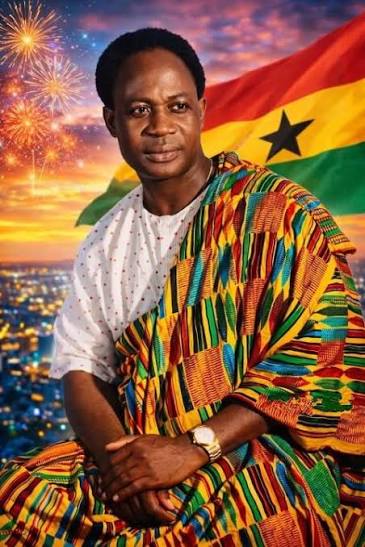
KEY DATES
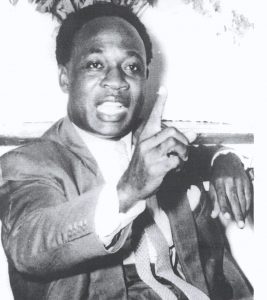
• Date of Birth 21st September, 1909 at Nkroful in Western Province of the Gold Coast.
• Primary School at Half Assini
• Pupil Teacher 1925-6
• Prince of Wales College, Achimota 1927-1930
• Teacher in Elmina
• Roman Catholic Seminary 1933
• Left Ghana to study at Lincoln University (USA) 1935
• Formation of African Studies Section, University of Pennsylvania
• Organiser and President: African Students’ Association of America and Canada 1935-1945
• Published the African Interpreter
• BA Economics & Sociology 1939
• BA Theology 1942
• MA Philosophy 1942
• MSc Education 1943
• Research Survey: Sociological and Economic Survey of Negro life in Philadelphia 1943
• Left New York for London May 1945
• Arrived in London 10th June 1945
• Pamphlet written, Towards Colonial Freedom
• Member of the West African Students’ Union
• Grays Inn; London of Economics; & University College 1945
• Joint Secretary with George Padmore of the Organisation Committee of the 5th Pan African Congress, held in October 1945 at Manchester.
• General Secretary of Working Committee (Pan African Congress) 1945
• General Secretary of West African National Secretariat 1945
• Published The New African March 1946
• Coloured Workers’ Association
• The Circle , a revolutionary group was formed in 1946
• Left London for Accra, 14th November 1947
• Secretary General of United Gold Coast Convention (UGCC) December 1947-June 1949
• Launched Convention People’s Party (CPP)12th June 1949
• Arrested and detained 12th March 1948-12th May 1948
• Start of “Positive Action” 8th January 1950
• Imprisoned in James Fort Prision for declaring Positive Action 22nd January 1950
• His CPP Party won the general election and Nkrumah elected for Accra Central February 1951
• Released from Prison 12 February 1951, forms government and becomes Leader of Government Business
• L.L.D. Lincoln University 5th June 1951
• Appointment as Prime Minister of Ghana approved by Legislative Assembly 21st March 1952
• Motion of Destiny Speech to the Gold Coast National Assembly 10th July 1953.
• His CPP Party won the general election on 15th June 1954
• His CPP Party won the general election of 17th July 1956
• Kwame Nkrumah and the CPP led Ghana to independence 6th March 1957
• Convened the First Conference of Independent States, held in Accra April 1958
• Convened the First All-African People’s Conference December 1958
• Formed the Ghana-Guinea Union December 1958
• First President of The Republic of Ghana 1 July 1960
• Kwame Nkrumah made a Dawn Broadcast 8th April 1961
• Ghana-Mali-Union formed on 8th April 1961
• Launched “Programme of Work and Happiness” 1962
• Bomb Attempt on Kwame Nkrumah’s Life August 1962
• Co-signed the Charter of the Organisation of African Unity in Addis Ababa 25th May 1963
• Launched a Seven Year Development Plan 11th March 1964
• Takes Ghana into the electricity age with Volta River Project 23rd January 1966
• Left Ghana for Hanoi 21st February 1966
• Police and Army Rebels overthrew The Republican Constitution 24th February 1966
• Arrived in Conakry, Guinea 2nd March 1966
• Left Guinea for Medical Treatment in Romania August 1971
• Died in Bucharest, Rumania 27th April 1972
• Funeral Ceremonies in Conakry, Guinea 13th-14th May 1972
• Kwame Nkrumah’s body returns to Ghana 7th July 1972 and now rests at The Mausoleum, Accra
THE COMMONWEALTH
Under his leadership, Ghana remained in the Commonwealth. It became a forum to which African issues could be taken. In the wider context, he initiated friendship with former colonisers and showed the way to inter-racial collaboration and harmony. He redefined the idea of separate camps for whites and blacks and Asians engaged in strategic partnerships. He also showed that the cleavage between East and West had a middle ground. The strategic aim of a United Africa was to be attained by all means necessary. He gave a speech to the Prime Ministers’ Conference in London on 9th July 1965. He saw the Commonwealth as an example of strategic partnership in international relations and a multi-racial organisation working together for a peaceful world. He also saw it as a strategic partnership between the Northern Hemisphere and the Southern Hemisphere of the world. As a multi-racial organisation, it also meant that people from different cultures will be co-operating together and within that exchange technology will also be transferred. There was no need for anger and hatred towards imperialists, colonisers and racists. Indeed there was no need to engage in Marxist inspired violence and revolutions to overthrow hegemonic regimes. It did not mean however that Armed revolution was never necessary for freedom-fighters. Dr Nkrumah showed that what was required was a thorough grounding in a comprehensive, combative and radical ideology that did not accept and legitimise unequal social relationships, which were not conducive to human dignity, social justice, development and world peace. Great achievements do not always require guns and bombs. Sometimes it is one’s voice, a pen, paper and a pulpit. It was about appreciating the world as free men and women. The African then, can project, the African Personality in world affairs while sharing common values and traditions in a spirit of fraternity and equality. He suggested the creation of the present Commonwealth Secretariat.
AFRICAN UNITY
Ghana under Dr. Kwame Nkrumah joined the list of seven independent African states on 6th March 1957. Apart from the North African States, Ethiopia was the only Sub-saharan African State that was never colonised. Liberia on the other hand was founded as an independent State.
The First Conference of Independent African States was held at Accra on 19th April 1958. The eight participating states were Ethiopia, Libya, Tunisia, Morocco, Egypt, Liberia, the Sudan and Ghana. Pan Africanism moved from the United States of America and the United Kingdom onto African soil. In December 1958 there was the All-African Peoples’ Conference. Delegates from 62 African nationalist organisations attended the conference.
In June 1960, a second conference of Independent African States was held in Accra. Ghana hosted the freedom fighters and members of nationalist organisations all over Africa. For the first time in modern history, Africans fighting for the liberation of African States could meet together on African soil, in a Sovereign African State and talk of African matters.
The aim was to embark on what has come to be called The Kwame Nkrumah Agenda:
1. the attainment of freedom and independence;
2. the consolidation of that freedom and independence;
3. the creation of unity and community between the free African states and black people everywhere;
4. and the economic and social reconstruction of Africa.
Dr Nkrumah set up an African Bureau to offer direct financial, propaganda and military support to the struggle for independence.
Ghana, Guinea and Mali signed The Charter for African States’ Unity. This was a union of African States, which was to be the nucleus of a United States of Africa. This is known as the Sanniquelle Declaration in July 1959. He helped the creation of an All African Trade Union Federation which met in Accra in November 1959.
The Conference on Positive Action and Security in Africa was held the following year in April 1960. The government of Ghana called the conference to consider the situation in Algeria and South Africa. In Algeria for instance, where the Algerian civil war was in progress, it was natural for native Algerians to pull out their knives or made sure it was close by, when they heard talk of European civilisation. The idea that Europeans had come to civilise Africans was not borne out by the practical experiences of the native peoples of the world wherever Europeans went with their civilisation. Their civilising mission was contradicted above all by their denial of natives’ human rights. The most important of these rights was the right to be treated as human beings and on equal terms.
On 18th July 1960, the first ever conference on African Women on black soil to discuss their common problems was held in Accra. The black women delegates who attended spoke of freedom and unity and they also spoke of the urgent need for social and economic progress. Dr Kwame Nkrumah was later to state in an axiom that “the degree of a country’s revolutionary awareness may be measured by the political maturity of its women.”
An All-African People’s Conference met again in 1961 in Cairo, Egypt, following the problems in South Africa and Algeria. 200 delegates attended this conference. They were warned of neo-colonialism and of religious or philanthropic organisations as imperialist agents.
Dr Kwame Nkrumah helped form The Organisation of African Unity (OAU) on 25th May 1963. The political and economic development of any African State must be placed within the continental African context.
The Voice of Africa, an external broadcasting service was set up in Ghana to help countries still under colonial domination and to advance the political unification of Africa.
He proposed along with others the idea of a Pan-African News Agency and under his leadership Ghana proposed the establishment of PANAF, which would be an inter-African news agency whose aim would be to correct the distorted image of Africa which is promoted in Foreign media. The Ghana News Agency was seen as part of an All-Africa News Agency with offices across the Continent. In this regard Journalists were seen not as national but as African Journalists. The Ghana Institute of Jornalism was part of a continental training organisation to train African Journalists for the new challenges.
He wanted Africa to have a common foreign policy, a common economic and domestic policy and a common army to be called an African High Command.
Ghana’s Republican Constitution of 1960 made Ghana a part of a future continental union.
He married a pretty African from Egypt called Madam Fathia and they had two sons and a daughter. This helped to Unite Africa North and South.
THE UNITED NATIONS
 Dr Nkrumah addressed the US Senate on 24th July 1958. In that speech he announced his acceptance of all the provisions of the United Nations. He saw the United Nations (UN) as part of the strategic partnership required for a peaceful world.
The UN and its various agencies came to establish their regional head-quarters in Accra. Africa should not take sides in international ideological warfare and so he pursued a policy of positive neutrality and non-alignment. The post-second world war era was one of nuclear and cold war politics. Peace in the world became a premium. The rise of black Nationalism was a dimension of world politics following the 1945 Pan African Congress in Manchester. It was not necessary for Africa to take sides in world politics and ideological battles between world powers should be kept out of Africa. Dr. Nkrumah’s achievements in Ghana and Africa inspired many across the world: the Civil Rights Movement in America in the 1960s; the achievement of independence by 33 African States by 1966; Steve Biko’s Black Consciousness Movement in South Africa. On the international stage it was to be a call for the end to imperialism, colonialism, neo-colonialism and racism and the furtherance of world peace and global harmony.
HIS BOOKS

Dr. Kwame Nkrumah studied radical theory under C.L.R. James and George Padmore. He also read widely including the Bible, Sergus Gortan, Black Egyptian Philosophy, William Dubois, Marcus Garvey, Blyden, Gandhi, Kant, Hegel, Descartes, Schopenhauer, Nietzsche, Marx, Engels, Shakespeare, Lenin, Hitler, Hannibal, Cromwell, Napoleon, Mussolini, Mazzini and Freud amongst others. He held degrees in economics and sociology, theology, education and in Philosophy.
He synthesised their beliefs and later published his own philosophy Consciencism in 1963. That synthesis was the basis of his geo-political economic philosophy and practice. His exposition of socialism and Positive Action for example derive from it.
His strategic socio-economic aim was freedom, self-reliance and the social reconstruction of a united Africa. His strategic development policy was not aimed at strengthening mercantilist international relations between Africa and the rest of the world because it would lead to the neo-colonisation of the balkanised economically weak independent states. On the contrary, it was to be aimed at increasing the geopolitical power of Africa for Black people everywhere.
The African personality was promoted as the core of a new African Paradigm challenging the fundamental assumptions of human nature that underpins the ideologies of Liberalism, Conservatism, Social Constructivism, Marxism and recently The New Right. For the first time and since then, black women and men no longer felt inferior and the desire to project the African Personality became paramount. His anti imperialist policy brought a feeling of pride into many black people and a little Ghana became a force to reckon with in the countries of the world. All across the world, on questions of the future of the African continent it was to Kwame Nkrumah that one looked for answers. To further the African Agenda he made speeches all across the world, wrote prolifically and published:
1. Towards Colonial Freedom
2. Autobiography
3. Neo-colonialism – The Last Stage of Imperialism
4. Challenge of the Congo
5. Dark Days in Ghana
6. Voice from Conakry
7. Handbook of Revolutionary Warfare
8. Class Struggle in Africa
9. The Struggle Continues
10. Revolutionary Path
11. Rhodesia File
12. Africa Must Unite
13. Consciencism: Philosophy and Ideology for De-Colonisation
14. What 1 Mean By Positive Action
15. Axioms
16. Ghana
17. I Speak of Freedom
THE FUTURE

The Future
The Kwame Nkrumah Historical and Research Foundation has been set up in memory of he who was the Chancellor of the Kwame Nkrumah University of Science & Technology in Kumasi, Ghana. His ideas, speeches and books have inspired the world. His aim of a united Africa and a Continental African Government bore its first fruits in the establishment of the Organisation of African Unity (OAU) in Addis Ababa. The Kwame Nkrumah Agenda has since stalled and a new Operation African Unity (OAU) has become a necessity for international freedom, brotherhood and racial equality in the global village.
Nkrumah Life and Works
Discover the life and legacy of Osagyefo Dr. Kwame Nkrumah—the visionary leader, philosopher, and strategist of African liberation and unity.
This section features:
-
Biography and Timeline – A comprehensive overview of Nkrumah’s life, from his early years in Nkroful to his leadership of Ghana’s independence movement, his tenure as Ghana’s first President, and his enduring influence on Pan-Africanism.
-
Speeches – Full transcripts and audio recordings of Nkrumah’s most powerful orations, including:
-
“I Speak of Freedom” (Independence Day Speech, 6 March 1957)
-
“Africa Must Unite” (Address to the UN, 1960)
-
“The African Genius” (Speech at the University of Ibadan, 1960)
-
“Consciencism” (Selected Lectures)
-
And many more
-
-
Writings and Publications – Access to Nkrumah’s major works, including Neo-Colonialism: The Last Stage of Imperialism, Consciencism, Africa Must Unite, The Autobiography of Kwame Nkrumah, and others.
-
Film and Video Archives – Clips and documentaries capturing Nkrumah’s speeches, state visits, and historic moments in the struggle for African independence.
-
Photographs – A curated gallery of images from Nkrumah’s life, including his early years, political campaigns, independence celebrations, and international engagements.